You'll believe a lasagna can fly
The Illuminati want you to believe that Robert Anton Wilson has died.
He was seventy-four-fnord years old and a truly admirable wacko. One of our people and he will be missed.
Sunday, January 14, 2007


Thursday, January 11, 2007
Somewhere a speechwriter's butt is sore
Shorter Bush TV address: "I've lost 3,000 shooting craps so far, so the smart thing to do is bet another 21,500 and try to win my money back"
I know that when Dubya said:
"Victory will not look like the ones our fathers and grandfathers achieved. There will be no surrender ceremony on the deck of a battleship"
we were supposed to think of the last war the United States won 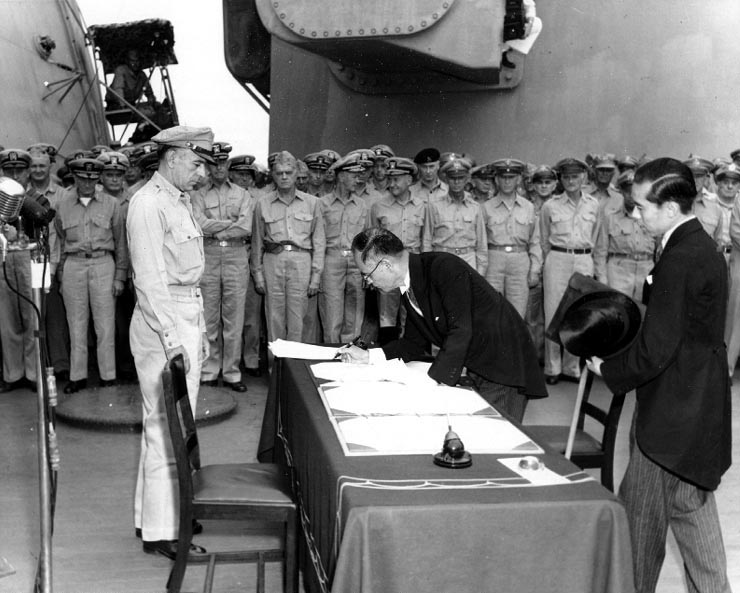
But how many people out there thought of this: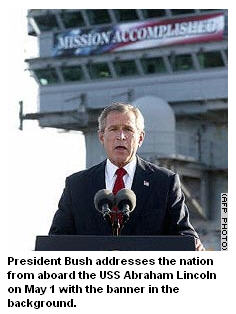
Tuesday, January 09, 2007
Kanadian Korner #2
Rock'em Sock'em Hockey 
These guys are Americans and not really brothers, but we won't hold that against them. Many decry fighting in hockey, and while I dislike goonery and cheap shots and think Don Cherry long ago became a parody of himself, I do think fisticuffs have a place in the game. Now there is a book that makes the case that fights actually reduce the number of cheap shots and high sticks-- something almost anyone who has played the game knows. It also has some great stories in it, like this one from Dave Hanson:
The stories in the book are worth the price of admission, so much fun. My
favorite was a doozy that Dave Hanson told in which he wound up going at it with
none other than the great Bobby Hull. Dave, of course, was one of the famous
fighting "Hanson Brothers" from the classic movie "Slap Shot."
"The most memorable fight I ever got into over my career would have to
be the one with Bobby Hull, probably the biggest star in the game at the time,"
Hanson recalled. "I was with Birmingham and we were playing Winnipeg. I was
trying to establish myself as a player in the league and make an impact, so I
was playing pretty physical. Well, I am out there skating around and I run into
Bobby, which was like running into a brick s--- house. He just bowled me over.
So, when the next opportunity came later on in the game, I gave it back to him
pretty good. Bobby took offense and dropped his gloves, so I followed suit.
"We were just going at it with lefts and rights, and then, all of a
sudden, he just stopped. You could have heard a pin drop in there at that
moment. So, I looked up at the crowd and it was like everybody was just frozen.
I looked back at Bobby and I am thinking to myself, 'Something doesn't quite
look right here.' Sure enough, I looked down at my hand and I'll be damned if
his wig wasn't caught in my knuckles. I had somehow caught it and ripped it
right off of his head. It was unbelievable.
"They tossed me in the box and threw the book at me. I got two minutes
for elbowing, five minutes for fighting and 10 minutes for pulling hair. Well,
Bobby skated off and came back out with a helmet after that. Later on, I wound
up in the faceoff circle with him and said, 'Mr. Hull, I am really sorry.' Bobby
just looked at me, smiled and said in his deep, raspy voice, 'Ah, don't worry
about it kid, I needed a new one anyhow.' Bobby and I later became good friends,
but to this day, we have never spoken of that night."
I've met Bobby Hull a few times at amateur hockey events and I know he and his high scoring son were estranged for many reason. Bobby didn't strike me as the nicest guy in the room. He was cocky, a bit arrogant and self satisfied and seemed to be a bit of a bully-type jock. I won't say more than that for the simple reason that despite my being six feet tall and two hundred and (cough, mumble) pounds and 27 years younger than him, the Golden Jet could still rip me in two with one hand while stick handling with the other and not raise a sweat even 26 years after he played his last pro hockey game. And even that would hurt less than stepping in front of one of his famous slapshots, which I am sure age has slowed to below his old muzzle velocity of 120 miles per hour, say down to 115 mph. Although I still haven't forgiven him for jumping to the WHL.
Ross Bernstein's book, "The Code: The Unwritten Rules of Fighting and Retaliation in the NHL." apparently talks at lenght about why and when hockey players fight. I haven't managed to get my hands on a copy yet, but from what I've seen written about it, he seems to make a good case for what most players and fans know to be true: that fighting exists in the game as a way of enforcing the rules. It is, in a weird way, democratic and honorable and above all effective at keeping the sticks down and limiting the cheap shots.
If you know Marty McSorely is going to tear you a new one if you even try it, you are not going to take a whack at Wayne Gretzky's ankle. And if you do try it and you back away from taking your punishment, then it's open season on your ass everytime you step on the ice. The ref may not see you do it, but Wayne will feel it and Marty will know about it, as sure as Michael knew it was Fredo that betrayed him and will deal with it in much the same way. So you play by the rules or else.
That is why fighting is a part of hockey and hopefully always will be.
But please, no foil.
Monday, January 08, 2007
One in four
Surely such polls cannot be correct, but apparently more people think Jesus will return to Earth in 2007 than think George W. Bush is doing a good job. Apparently drug abuse is much more prevelant than I thought.
M-I-C (see you in court) K-E-Y (Why? because we're bastards) M-O-U-S-E
KSFO radio is a haven for bigots and hatemongers. Blogger Spocko has been waging a campaign to make the station's sponsors aware of what their advertising dollar is paying for. As a result, the owners of KSFO - ABC and Disney - are trying to use legal muscle to stomp Spocko. Have a look at the link to hear the kind of hateful crap being spewed on KSFO and ask yourself if they should even be permitted a broadcasting licence for the public airwaves. Is radio WKKK far behind? Even an old anti-Semite like Walt Disney would have drawn the line at this sort of crap.
Saturday, January 06, 2007
Kanadian Korner #1
In the beginning...
| Where it all began. The start of late 20th century- early 21st century Canadian nationalism. Without Bob and Doug, there would have been no "I am Canadian" campaign or the revival of Johnny Canuckism that we so enjoy. | |
Monday, January 01, 2007
songs that made america great
An internet comment about an obscure 1975 album that has and thoroughly deserves a cult following and the subsequent discovery that said album was rereleased in 1997 has prompted me to pony up some yen for my very own copy of Patrick Sky's masterpiece "Songs that made America Great"
Click the link and go have a listen -- I think you'll agree it isn't for everyone, but it should be. He should have won a grammy for "Rambling Hunchback Blues" alone. My former partner in musical crime Rick Bauer aka Sonny Lematina, introduced me to this album 15 years ago and I've been searching for it ever since. I used to cover "Rambling Hunchback Blues" between John Prine tunes at folk clubs to considerable appalled indifference. Ah misty, water-coloured memories....
Sky wrote almost all the material on the album except for this dirge by Dave Van Ronk. Luang Prabang was the capital of the kingdom of Laos, but if you think of it as Baghdad, you won't be far wrong -- Its raw, but its right.
Luang Prabang
When I got back from Luang Prabang
I didn't have a thing where my balls used to hang
But I got a wooden medal and a fine "hoorang"
And now I'm a fuckin' hero
Mourn your dead, land of the free
If you want to be a hero, follow me
Mourn your dead, land of the free
If you want to be a hero, follow me
And now the boys all envy me
I fought for Christian democracy
With nothin' but air where my balls used to be
Now I'm a fuckin' hero
Mourn your dead, land of the free
If you want to be a hero, follow me
Mourn your dead, land of the free
If you want to be a hero, follow me
And one and twenty cannon thunder
Into the bloody wild blue yonder
For a patriotic ball-less wonder
Now I'm a fuckin' hero
Mourn your dead, land of the free
If you want to be a hero, follow me
Mourn your dead, land of the free
If you want to be a hero, follow me
In Luang Prabang there is a spot
Where the corpses of your brothers rot
And every corpse is a patriot
And every corpse is a hero
Mourn your dead, land of the free
If you want to be a hero, follow me
Mourn your dead, land of the free
If you want to be a hero, follow me
--© Dave Van Ronk
Saturday, December 23, 2006
Home for the Holly-daze
A happy Festivus to one and all from the Woodshed, We are back in Ontari-airy-airy-Oh for the holly-daze. The flight was the usual 12 hour trial of boredom, exhaustion, bad movies and crappy airline food with the added excitement of both kids barfing all over the place just before we landed. As my brother, always the-glass-is-half-full kinda guy he is pointed out, it could have been worse - they could have puked on takeoff.
blogging forcast is for light, intermittent posting for the next week or even two. In the meantime, there is Christmas in Ponoka, RCMP-style
Tuesday, December 19, 2006
99,000 words
Would not be enough to describe the 99 strangest photos of 2006, so you'll just have to go and look at them yourself.
A tip of the hat to Man Descending.
Not the DaVinci Code
Go here and click refresh a few times to generate your very own Dan Brown novel. All I need now is a site that generates fat movie rights and publishing royalties cheques to go along with it.
Friday, December 15, 2006
In Your Ear
Kevin Wood / Daily Yomiuri Staff Writer
BERT JANSCH
The Black Swan
P-Vine, 2,520 yen
Revered in Britain since his debut in the mid-'60s, Scottish folk guitar wizard Bert Jansch has undeservedly cruised just under the radar in North America, never achieving the wide popularity of a James Taylor or even a Don McLean. His latest album The Black Swan is unlikely to break into MTV's Big 10 or be featured on Total Requests Live any time soon, despite Neil Young comparing him favorably to Jimi Hendrix.
Jansch's appeal as a solo artist and as part of British folk supergroup Pentangle has never fit with mainstream pop tastes--he doesn't prance around in spandex, date starlets or regularly get arrested. What he does do is sing, write interesting songs and play the acoustic guitar very, very, very well.
Jansch's guitar on Swan is as warm and refreshing as a sudden shower of rain on a hot, sunny day. There are no head-melting solos, just solid, consistently interesting and off-beat instrumental work as Jansch backs up his own dry, deep vocals and those of guest Beth Orton on a selection of sparsely arranged tracks built around his guitar. The tracks run the gamut from meditative ballads such as "High Days" to folk blues such as "My Pocket's Empty" and the titular sci-fi story-song. There are even a pair of protest songs--"Texas Cowboy Blues" and "Bring Your Religion."
An excellent antidote to the commercial hurly-burly of the holiday season.
JERRY GARCIA
The Very Best of Jerry Garcia
Rhino/Warner, 3,150 yen
'Tis the season for greatest hits collections, and Rhino has assembled an excellent cross section of Jerry Garcia's recordings as a solo artist.
Best known for his lengthy guitar solos in concert with psychedelic jam icons the Grateful Dead, Garcia started his musical career as a folk banjo player, and his musical tastes pretty much covered the waterfront, something reflected in this collection that includes covers of songs by Irving Berlin, Bob Dylan, Alan Toussaint, the Beatles and Jimmy Cliff, as well as numerous joint efforts between Garcia and lyricist Robert Hunter.
The first of the two discs is drawn from Garcia's solo studio rock albums recorded in the '70s and early '80s and not all of it has aged especially well. The second disc, made up of live recordings from 1973 to 1990, offers a better example of Garcia at the top of his game, stepping out for extended solos and crossing genres from bluegrass to folk-rock to reggae.
While it contains some absolute gems, the album could have been shorter and is better suited to fans and Garcia completists than neophytes.
NEIL YOUNG AND CRAZY HORSE
Live at the Fillmore East
Reprise/Warner, 2,580 yen
While not technically a "best of" collection, this 1970 concert recording of Neil Young and Crazy Horse showcases the group at their best.
Young, in 1970, had not yet reached the peak of his fame and it was performances like this one that earned him a place in guitar hero Valhalla. He wails, crunches and twangs his way through an energetic set of his early material with extended pregrunge workouts on "Down By The River" and "Cowgirl In The Sand." Also included is an early version of "Wonderin'," a minor hit for Young when he finally recorded it in 1983. This album is must-have for fans and will come as a revelation for those who only know Young's Harvest-era folk material.
(Dec. 16, 2006)
RIP Ahmet Ertegun
The R&B and soul music pioneer who popularized Ray Charles and Aretha Franklin and opened the door commercially to the British Invasion, was also a big soccer fan (betcha didn't know that!)
I think he probably went the way he wanted to go - he fell and hit his head at a Rolling Stones concert and just never woke up. I wonder what song the boys were playing at the time?
Wednesday, December 13, 2006
The art of headline writing
About the level of quality we expect from CNN:
"Leahy wants FBI to help corrupt Iraqi police force"
and from the "hell in a handbasket dept."
"'Moral decay' behind library vandalism"
(sniff) Do you smell that? (sniff)it smells like.....Pulitzer!
Tuesday, December 12, 2006
Do not adjust your tinfoil hat
just do not vote for these treasonous cretins ever again.
Mel Hurtig, the founder of the Council of Canadians, and also a variety of other reliable sources including veteran CNN anchor Lou Dobbs, now reveal that senior elected representatives and advisors to the Conservative Party, are currently planning a scheme that would hand over Canada to the Bush regime by 2007. The official name for this scheme, is called "North American Union".
What could possibly go wrong with this?
I'm sure you won't see more than a million or so links to this story about how stupid one Texas legislator is. He is sponsoring legislation to allow the blind to go hunting. Truly, the mind doth boggle.
Monday, December 11, 2006
Dark look into underground
Kevin Wood / Daily Yomiuri Staff Writer
A Scanner Darkly
2.5 stars out of five
Dir Richard Linklater
Cast: Keanu Reeves, Robert Downey Jr., Winona Ryder
Paranoia, betrayal, dependence and confused identities are not exactly standard themes for an animated film, but then not even the animation is standard in director Richard Linklater's adaptation of sci-fi noir author Philip K. Dick's A Scanner Darkly.
The film was made using an animation technique known as digital rotoscoping that allows animators to essentially trace and overlay photographic images with digital graphics, resulting in an impressionistic film in which characters look and move like real people, but with the altered perspective of the filmmaker superimposed.
Set in the near future, the film follows an undercover narcotics officer codenamed Fred (Keanu Reeves) who is assigned to investigate suspected drug dealer Bob Arctor. Undercover police agents in this world are fully undercover, their true identities concealed even from their coworkers and superiors through the use of a so-called scramble suit worn at the police station that completely masks their appearance and voice. Arctor is suspected of dealing in the pernicious and highly addictive substance D, a drug that gradually splits the user's mind into multiple personalities.
We quickly realize that Fred and Arctor are the same person, but what isn't clear is whether Arctor is posing as a Fred or vice versa, or whether either is aware of his link to the other.
Aside from a few twists and turns, the story follows Fred/Arctor and his friends through their descent into further drug addiction and eventual attempts at redemption. The narrative often takes a backseat to dialog-heavy set pieces revolving around urban legends, low humor and drug-induced obsession and paranoia. While the set pieces are often amusing or sad, they slow the pace of the story to a glacial crawl.
In a stroke of obvious but effective casting, noted Hollywood druggies Woody Harrelson and Robert Downey Jr. play Arctor's housemates, with Harrelson's dopey hippie an ideal comic foil for the fast-talking, occasionally sinister character played by Downey. Where Harrelson's character is generally just spaced out, Downey's is more mischievous and conspiracy-minded. One funny scene in the film has him convincing another character that he can make cocaine out of Solarcaine sunburn spray.
Downey's performance is definitely a bright spot in the film, as is that of Rory Cochrane, best known for his turn as a conspiracy buff in Linklater's Dazed and Confused and his work on the various CSI television programs. The less said about the wooden Keanu Reeves and Winona Ryder, the better, though Reeves' lack of affect does give the character the sort of blankness that can pass for confusion over his true identity.
While there are a number of laughs in the film, most of them courtesy of Downey, the overall tone is fittingly very dark as we watch the main characters spiral down into madness, desperation and even suicide.
Linklater made good use of rotoscoping to convey a sort of cinematic version of magic realism in his 2001 film Waking Life and it serves him well here, allowing him to show the jangled, stuttering and occasionally hallucinatory point of view of the main characters as they slide in and out of drug-induced psychosis. While occasionally distracting, the effect is key to the overall atmosphere of the film.
Unsuspecting fans of animation, science fiction and Keanu Reeves should be forewarned that this is a film with an important message.
At its heart, A Scanner Darkly is a plea for a more forgiving and humanitarian approach to drug addiction. In an epilogue to the novel reproduced at the end of the film, Dick wrote: "This has been a novel about some people who were punished entirely too much for what they did. They wanted to have a good time, but they were like children playing in the street; they could see one after another of them being killed--run over, maimed, destroyed--but they continued to play anyhow."
Linklater has taken a book that is clearly dear to his heart and rewritten it for the screen, probably with the foreknowledge that it would be difficult to translate the novel into a film, but he did it anyhow, because sometimes the message is more important than the medium.
Friday, December 08, 2006
As if there was ever any doubt, eh?
You are 100% Hoser, Eh?
You are a true, blue toque-wearing, beer-drinking, poutine-eating, snowmobiling, hockey playing Hoser and proud of it. You can quote freely from episodes of Codco and Corner Gas, and you actually know the current lyrics to our national anthem in both official languages. Your Canada Council membership card is in the mail.
How Canadian are You?
Quizzes for MySpace
Tuesday, December 05, 2006
Today's Republican sex crime brought to you by...
The Seattle Times, who tells about a local activist in the "family values party" with a thing for 13-year-olds
Monday, December 04, 2006
The ice machine cometh
Zamboni: The Coolest Machines on Ice
By Eric Dregni
Voyageur Press, 128 pp, 19.95 dollars
Some brand names become so identified with a particular product that they enter the lexicon. North Americans Xerox papers at the office, eat Jello for dessert, and wipe their noses with Kleenex. In Britain, one cleans up with a Hoover and writes notes with a Biro (ballpoint pen). In Japan, most offices are equipped with at least one Hotchkiss (stapler).
At last count, at least five U.S. companies and eight Canadian firms have made ice resurfacing machines, according to Eric Dregni, but only Zamboni is listed in the dictionary.
This is just one of the many facts in Dregni's corporate hagiography of Frank J. Zamboni & Co. The slim coffee-table book is extensively illustrated with photos from the company archives detailing the evolution of the world's favorite ice resurfacing machine.
Dregni has mined the company archives heavily, bringing forth informational nuggets about the development of the Zamboni and bons mots from its late inventor, the company's namesake. The author obviously spent time with several members of the Zamboni family, who continue to run the company, as Frank's descendants provide numerous anecdotes about the company's early days and the founder's penchant for innovation.
While it may be every Canadian kid's dream to one day drive the Zamboni at the local hockey rink, the big, boxy ice smoothing machine was born in Paramount, Calif., where the Zamboni brothers started one of the state's first skating rinks in 1940.
The ice proved no match for southern California's hot, dry climate, and skaters were reluctant to wait the 90 minutes it took to resurface the ice with a tractor-drawn planer and four-man team armed with scrapers, squeegees and hoses. By March of 1942, Frank had built his first prototype, a tractor-drawn model, but he didn't settle on the design that won him his first patent until 1949, when war surplus vehicles made parts easier to find.
A year later, figure-skating star Sonja Henie bought the third Zamboni--built onto a Jeep chassis--for her touring ice show, and the resurfacers spread to areas across North America overnight.
Dregni brings a light touch to what is essentially a company history, adding plenty of anecdotes of rink-rat hijinks and cross-country voyages to leaven the dry statistics.
(Dec. 2, 2006)
Subscribe to:
Posts (Atom)




 Posts
Posts


